For any customer complaints or service requests, email Tata Hitachi at: customer.support@tatahitachi.co.in
For any customer complaints or service requests, email Tata Hitachi at: customer.support@tatahitachi.co.in

How the Right Excavator Attachments Can Reduce Heavy Machine Downtime
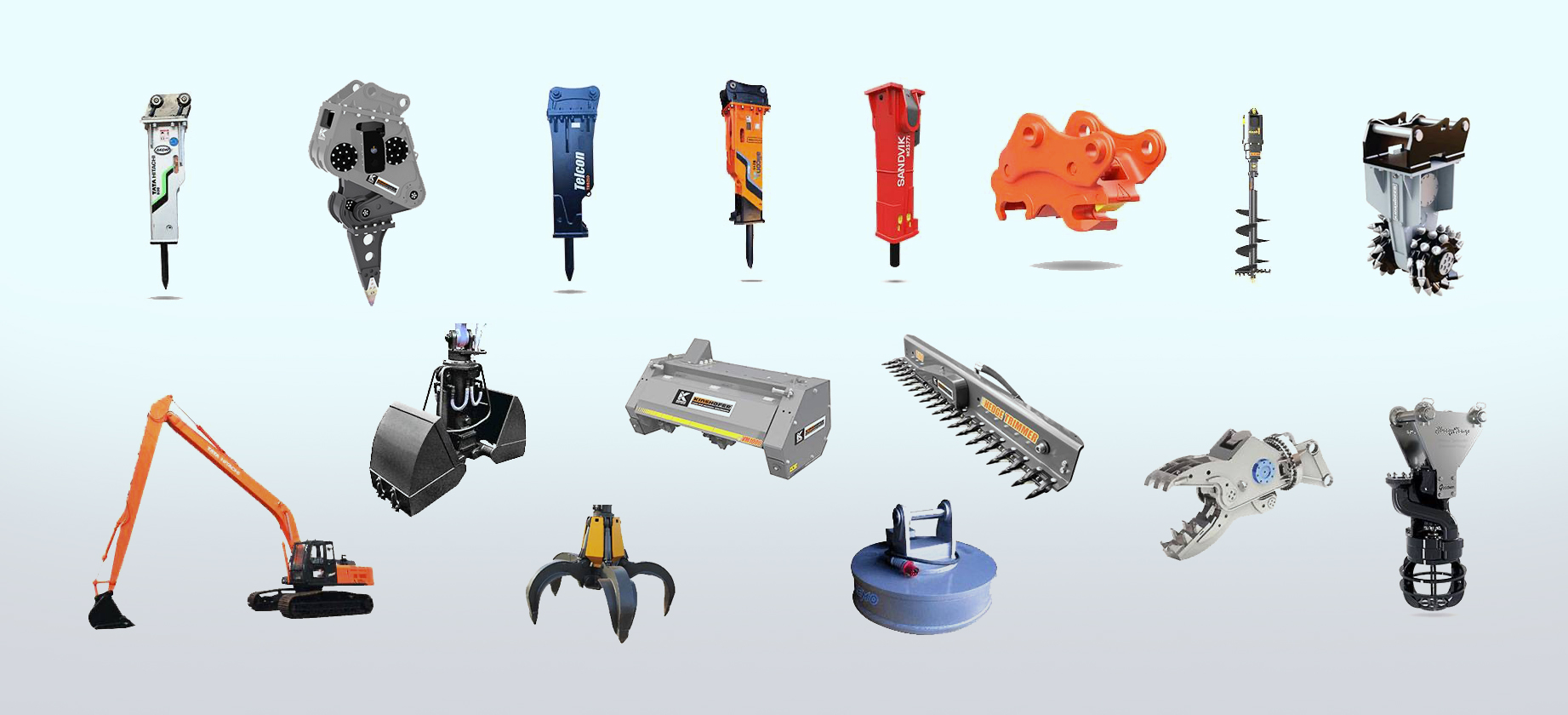 In construction, mining, and infrastructure projects, machine downtime often leads to delays and increased costs. Reducing this downtime requires more than quick fixes — it begins with the right choices in equipment planning. One of the most effective ways to improve machine reliability is through the careful selection and use of attachments. This blog explores how choosing the right attachments can improve equipment efficiency, reduce stress on the machine, and lower the chances of breakdowns.
Choosing the right excavator attachments is just as important as selecting the right machine. Whether it’s breaking hard rock, trenching, material handling, or dredging, task-specific attachments help improve productivity, reduce unnecessary wear on machine components, and minimise unplanned downtime. The right attachment also allows operators to complete jobs more efficiently while extending equipment life.
In construction, mining, and infrastructure projects, machine downtime often leads to delays and increased costs. Reducing this downtime requires more than quick fixes — it begins with the right choices in equipment planning. One of the most effective ways to improve machine reliability is through the careful selection and use of attachments. This blog explores how choosing the right attachments can improve equipment efficiency, reduce stress on the machine, and lower the chances of breakdowns.
Choosing the right excavator attachments is just as important as selecting the right machine. Whether it’s breaking hard rock, trenching, material handling, or dredging, task-specific attachments help improve productivity, reduce unnecessary wear on machine components, and minimise unplanned downtime. The right attachment also allows operators to complete jobs more efficiently while extending equipment life.
Why Choosing the Right Excavator Attachments Matters?
Excavators are designed to perform a wide range of tasks, but their efficiency largely depends on using the right attachment for the job. Selecting compatible attachments helps improve machine performance, reduces stress on key components, and supports smoother operations across construction, mining, and infrastructure projects.Why Heavy Equipment Downtime Happens
Unexpected breakdowns usually occur due to issues that build up over time. Common reasons include:- Using the wrong attachment for the task, which puts extra pressure on the machine.
- Frequent changing of attachments, which wears out joints and hydraulic systems.
- Continued use of worn or poor-quality attachments.
- Lack of proper maintenance or use of non-original parts.
- Scheduled downtime allows for routine checks and planned servicing to maintain machine performance.
- Unplanned downtime can result in delays and increased project costs.
How Attachments Affect Equipment Efficiency
Excavators and other heavy machines are designed to be versatile, but only when paired with the right attachment for the task. Appropriate attachments allow machines to complete jobs more efficiently and with less wear.-
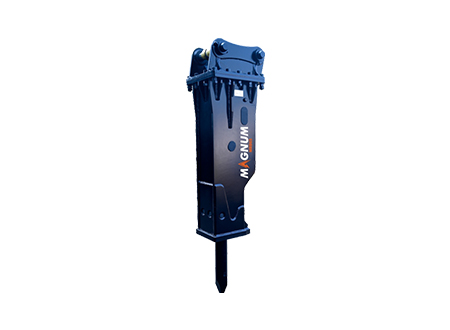
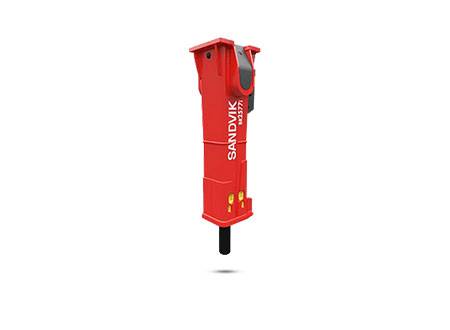
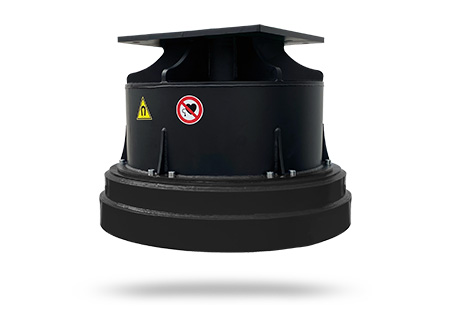
Hydraulic Rock Breaker:
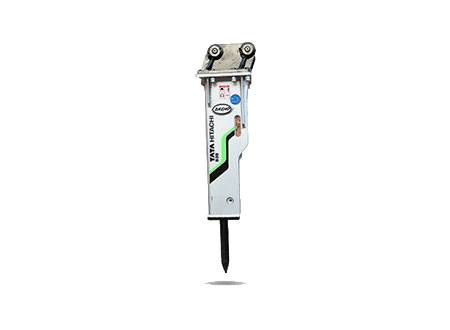
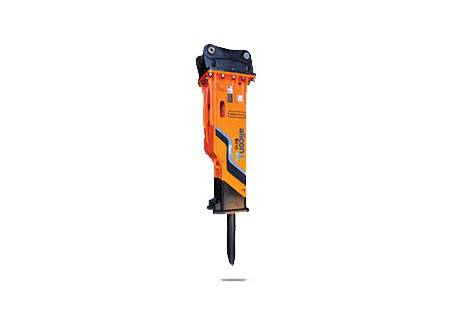
A Hydraulic Rock Breaker is ideal for demolition work and breaking hard materials like concrete or stone. It increases productivity on tough surfaces where standard buckets would cause delays and higher wear. It is commonly used in quarrying, mining, demolition, and road construction where high-impact breaking is required. -
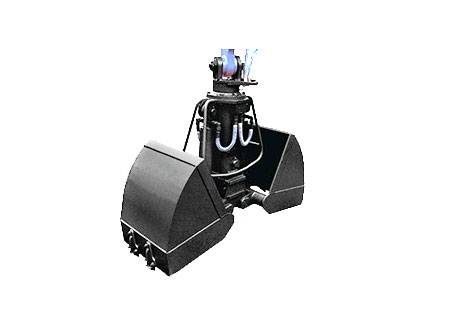
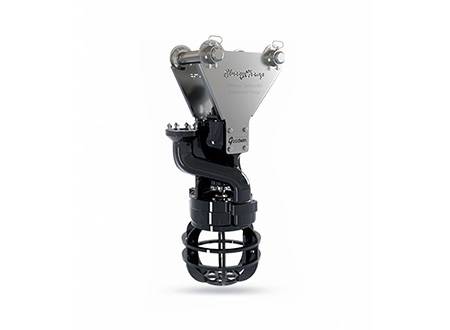
Clamshell Bucket:
A Clamshell Bucket is well-suited for digging and loading loose material in excavation jobs, improving cycle time and ensuring cleaner trenching with minimal spillage. It is ideal for excavation, foundation work, and material handling where faster loading and precision are essential. -
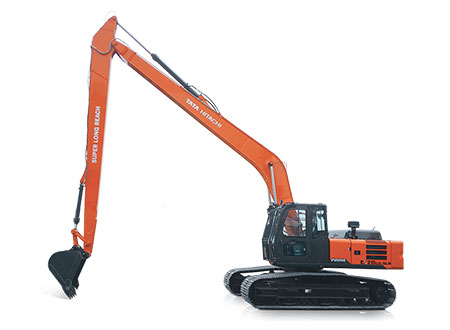
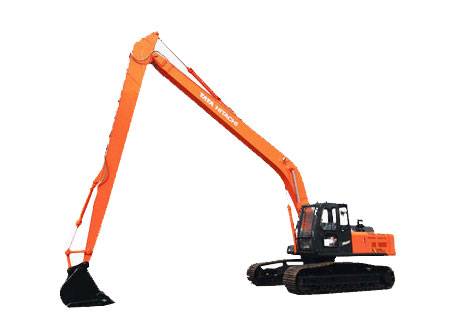
Super Long Reach Front:
A Super Long Reach Front allows for extended digging and dredging operations in canals, ponds, and rivers, reducing machine repositioning and improving reach without compromising stability. It is widely used for dredging, canal cleaning, deep excavation, and projects where standard excavator arms cannot safely reach.
How the Right Attachments Improve Productivity
Every attachment is designed for a specific application. Using the correct attachment helps complete tasks in fewer operating cycles, reduces idle time, and minimises wear on machine components. This contributes to higher productivity and better equipment utilisation across job sites.Reducing Mechanical Failures with Suitable Attachments
The condition of a machine is closely tied to the quality of attachments in use. Poorly matched or worn attachments increase the risk of mechanical failure. This can result in:- Leaks or failures in the hydraulic system.
- Faster wear on boom joints and couplers.
- Misalignment that affects stability and increases load on key parts.
- Match the machine’s operating pressure and structural design.
- Reduce the risk of failure.
- Fit into planned maintenance schedules and warranty terms.
Benefits of Using Genuine Attachments
While non-genuine or uncertified attachments may appear more affordable at first, they often lead to increased costs over time. Using genuine, OEM-approved attachments offers several advantages:- Better durability due to high-quality materials.
- Accurate fit with the machine’s frame and hydraulic systems.
- Longer service life, reducing the need for replacements.
Best Practices for Attachment Use and Maintenance
Even the best attachment can underperform if not handled correctly. To get the most out of attachments, one must consider the following practices:- Operator Training
- Train operators to match attachments with the task.
- Ensure proper methods for coupling and decoupling.
- Reinforce safe handling and usage practices.
- Daily Checks
- Inspect attachments for cracks, leaks, and worn parts.
- Check hydraulic fittings for damage or pressure loss.
- Monitor for unusual sounds during operation.
- Preventive Maintenance
- Replace high-wear components before failure.
- Rotate attachments between machines to balance wear.
Tata Hitachi’s Approach to Attachments
Tata Hitachi offers a wide range of excavator attachments built for Indian conditions — whether in road construction, mining, or urban projects. These attachments are developed to ensure compatibility, performance, and durability. Key benefits include:- Strong materials suited for long working hours and challenging terrains.
- Attachments designed to reduce fuel usage and operator effort.
- Precise engineering for seamless machine fit.
IT Integration and Smart Monitoring
Tata Hitachi has also integrated digital technologies into after-sales service. ConSite and InSite are advanced platforms that allow remote machine monitoring. These solutions provide:- Real-time usage data
- Predictive maintenance alerts
- Location tracking
- Performance analysis
Why Genuine Excavator Attachments Are a Smart Investment?
While low-cost attachments may seem economical initially, genuine excavator attachments are designed for compatibility, durability, and reliable performance. Investing in high-quality attachments helps reduce maintenance costs, improve equipment lifespan, and minimise unexpected downtime over the long termConclusion
Reducing downtime is not just about reacting to failures — it’s about planning ahead. The right excavator attachments, when paired with regular maintenance and monitoring, can significantly enhance machine availability and job site efficiency. Choosing high-quality, task-specific attachments:- Extends equipment lifespan
- Reduces breakdowns
- Increases productivity
- Maintains safety standards
FAQs
-
How do excavator attachments reduce machine downtime?
Using the right excavator attachment helps reduce stress on machine components, improves operating efficiency, and minimizes the risk of unexpected breakdowns. -
Which excavator attachment is best for demolition work?
Hydraulic rock breakers are commonly used for demolition, concrete breaking, and quarrying applications where high-impact performance is required. -
Why should I use genuine excavator attachments?
Genuine attachments are engineered to match the machine’s hydraulic system and structural design, ensuring better durability, performance, and long-term reliability. -
How often should excavator attachments be inspected?
Attachments should be inspected before daily operations and maintained according to the manufacturer’s recommended service schedule to ensure safe and efficient performance.
Electric Construction Heavy Equipment Machinery: Benefits, Disadvantages, and More
Read more
The Role of After-Sales Support in Heavy Equipment Longevity
Read moreMost Viewed Article
- Excavator: Types, Specifications, Uses in Construction Site
- Which Is Better: Backhoe or the Excavator?
- Construction Equipment License: How to Get Heavy Machinery Operator License in India
- Enhancing Excavator Efficiency: A Comprehensive Guide to Excavator Attachments
- How does the Backhoe Loader work?
Recent Articles
July 31, 2026.
Why Choose Tata Hitachi Excavators? Benefits, Price & Best Models in India
Why Choose Tata Hitachi Excavators? Benefits, Price & Best Models in India Tata Hitachi excavators are among the most trusted Continue Reading
Read more
July 29, 2026.
How Tata Hitachi Excavators Are Engineered for Fuel Efficiency
How Tata Hitachi Excavators Are Engineered for Fuel Efficiency Fuel is one of the biggest operating expenses in any construction Continue Reading
Read more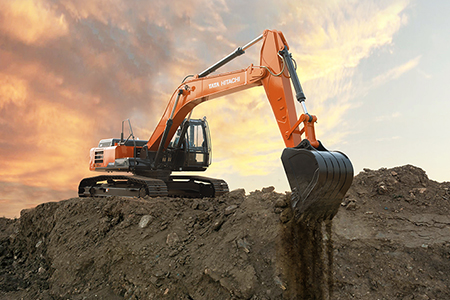
July 29, 2026.
How Much Does Excavation Cost in India? A Contractor’s Guide
How Much Does Excavation Cost in India? A Contractor’s Guide Excavation is one of the first and most important activities Continue Reading
Read more

Related Articles
July 31, 2026.
Why Choose Tata Hitachi Excavators? Benefits, Price & Best Models in India
Why Choose Tata Hitachi Excavators? Benefits, Price & Best Models in India Tata Hitachi excavators are among the most trusted Continue Reading
Read more
July 29, 2026.
How Tata Hitachi Excavators Are Engineered for Fuel Efficiency
How Tata Hitachi Excavators Are Engineered for Fuel Efficiency Fuel is one of the biggest operating expenses in any construction Continue Reading
Read more
July 29, 2026.
How Much Does Excavation Cost in India? A Contractor’s Guide
How Much Does Excavation Cost in India? A Contractor’s Guide Excavation is one of the first and most important activities Continue Reading
Read more
July 29, 2026.
Excavator Maintenance Checklist: Daily, Weekly & Monthly Guide
Excavator Maintenance Checklist: Daily, Weekly & Monthly Guide Regular excavator maintenance is essential for keeping the machine safe, productive, and Continue Reading
Read more
June 17, 2026.
How to Choose the Right Excavator for Your Construction Needs
How to Choose the Right Excavator for Your Construction Needs Selecting the right excavator is one of the most important Continue Reading
Read more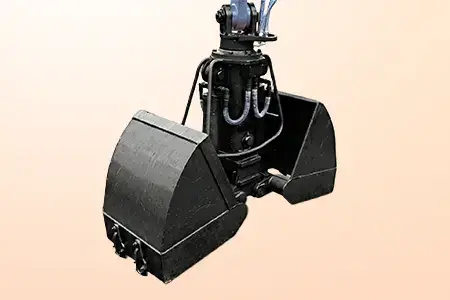
February 10, 2026.
Clamshell Buckets for Construction Excavators: Types, Uses, and How to Choose the Right One
Clamshell Buckets for Construction Excavators: Types, Uses, and How to Choose the Right One | Tata Hitachi
Read more
August 1, 2025.
The Role of After-Sales Support in Heavy Equipment Longevity
The Role of After-Sales Support in Heavy Equipment Longevity In industries like construction, mining, and infrastructure development, the journey doesn’t Continue Reading
Read more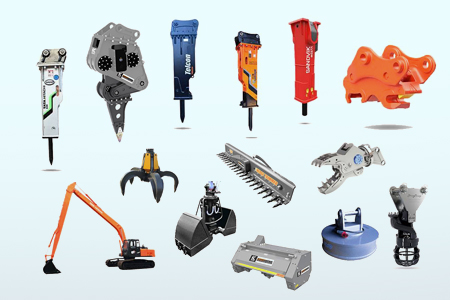
August 1, 2025.
How the Right Attachments Can Reduce Heavy Machine Downtime
How the Right Excavator Attachments Can Reduce Heavy Machine Downtime In construction, mining, and infrastructure projects, machine downtime often leads Continue Reading
Read more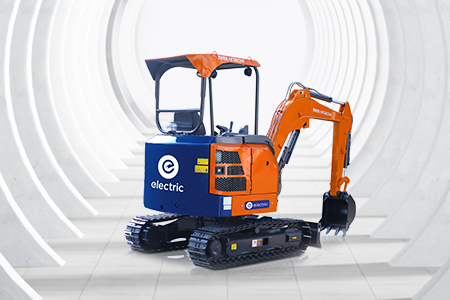
July 31, 2025.
Electric Construction Heavy Equipment Machinery: Benefits, Disadvantages, and More
Electric Construction Heavy Equipment Machinery: Benefits, Disadvantages, and More Introduction The construction equipment industry is undergoing a major transformation Continue Reading
Read more
April 22, 2025.
Construction Equipment License: How to Get Heavy Machinery Operator License in India
Construction Equipment License: How to Get Heavy Machinery Operator License in India Operating heavy machinery is a crucial role in Continue Reading
Read more