
Clamshell Buckets for Construction Excavators: Types, Uses, and How to Choose the Right One
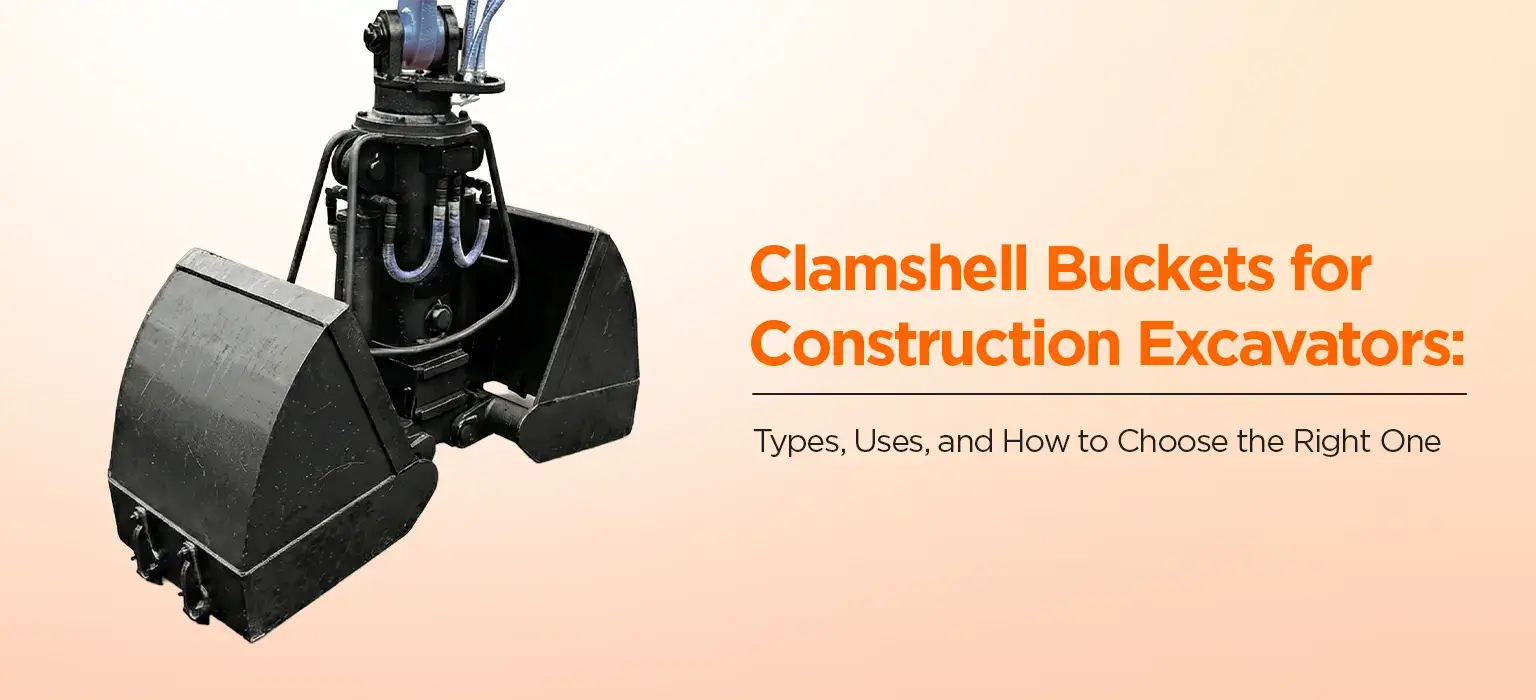
What Is a Clamshell Bucket?
Clamshell buckets are widely used for dredging, excavation, bulk material handling, and loading and unloading operations across construction, mining, marine, and port industries. Their versatile design allows efficient handling of materials such as soil, sand, gravel, rocks, and debris, especially in applications that demand controlled movement and vertical digging.
Designed for precision and operational efficiency, clamshell buckets play an important role in projects where space constraints, depth or material control are key requirements. Their ability to open and close vertically makes them suitable for a wide range of material handling and excavation tasks across diverse work environments.
How Does a Clamshell Bucket Work?
The working mechanism of a clamshell bucket is based on hydraulic operation. The two bucket halves are connected through hinges and are controlled by hydraulic cylinders or a rope-and-pulley system, depending on the design.
During operation, the bucket is lowered in an open position over the material. Once positioned, the hydraulic system closes the shells, gripping the material securely. The bucket is then lifted and moved to the desired location, where the shells open again to release the material.
This vertical opening and closing action of a clamshell bucket allows better control during excavation and material transfer, especially in deep pits, narrow trenches, or loading applications.
Types of Clamshell Buckets Used in Construction and Material Handling
Different construction and material handling requirements call for different clamshell bucket designs. Some of the commonly used types include:
Hydraulic Clamshell Buckets
These buckets are operated through the excavator’s hydraulic system and are widely used with modern construction machinery. They offer smooth operation, higher efficiency, and better control during material handling tasks.
Mechanical Clamshell Buckets
Mechanical clamshell buckets use cables and pulleys for operation. These are often used in crane-based applications and are suitable for bulk material handling where hydraulic connections are not available.
Light-Duty Clamshell Buckets
Designed for handling lighter materials such as sand, soil, or agricultural products, these buckets are used where material density is relatively low.
Heavy-Duty Clamshell Buckets
Built with reinforced structures, heavy-duty clamshell buckets are used for dense and abrasive materials such as rocks, scrap, or demolition waste.
Each type is designed to suit specific construction machinery and operational requirements, ensuring efficiency and durability on site.
Uses and Applications of Clamshell Buckets Across Industries
Clamshell buckets are preferred across multiple industries due to their versatility and controlled handling capability. Common applications include:
- Construction sites for vertical excavation and trench work
- Material handling at ports, stockyards, and warehouses
- Foundation and piling work in urban infrastructure projects
- Handling bulk materials such as coal, sand, and aggregates
- Cleaning and dredging operations in canals and water bodies
- Waste handling and recycling facilities
Among various excavator bucket types, clamshell buckets stand out for tasks where accuracy, depth control, and minimal material loss are critical.
Tata Hitachi Clamshell Bucket Range and Specifications
Tata Hitachi offers clamshell bucket attachments designed to meet diverse application requirements in construction and material handling. These buckets are engineered to match Tata Hitachi excavators, ensuring optimal performance, safety, and compatibility.
Key features of Tata Hitachi clamshell buckets include:
- Robust construction for demanding site conditions
- Application-specific designs for improved efficiency
- Compatibility with different excavator classes
- High-quality hydraulic components for smooth operation
- Optimised bucket geometry for better material grip
The clamshell buckets for excavator offered by Tata Hitachi are developed with a focus on durability and productivity, making them suitable for long-term use across various industries.
How to Choose the Right Clamshell Bucket for an Excavator
Selecting the correct clamshell bucket depends on multiple operational and machine-related factors. Some key considerations include:
Excavator Compatibility
The bucket must match the excavator’s operating weight, hydraulic capacity, and mounting specifications to ensure safe and efficient operation.
Application Requirements
Material type, density, and handling conditions play a major role. Light materials require different bucket specifications compared to dense or abrasive materials.
Bucket Capacity and Size
Choosing the right bucket capacity ensures balanced operation without overloading the machine or reducing productivity.
Operating Environment
Site conditions such as confined spaces, depth of excavation, or presence of water influence the choice of bucket design.
For any clamshell excavator application, selecting the right attachment improves efficiency, reduces wear, and enhances overall machine performance.
Benefits of Using Clamshell Buckets Over Conventional Buckets
Clamshell buckets offer several operational advantages when compared to conventional excavator buckets, especially in specialised applications.
- Better control during material handling and excavation
- Reduced spillage and material loss
- Efficient vertical digging capability
- Suitable for deep and narrow excavations
- Improved safety in confined work areas
- Higher precision in loading and unloading operations
Maintenance and Safety Tips for Clamshell Buckets
Proper maintenance and safe operation are essential to ensure long service life and consistent performance.
- Regularly inspect hydraulic hoses, cylinders, and pins
- Ensure proper lubrication of moving parts
- Check for structural wear or cracks on bucket shells
- Follow recommended load limits during operation
- Train operators on correct handling techniques
- Store attachments properly when not in use
Routine maintenance helps reduce downtime and ensures safe operation on the job site.
FAQs
-
What is a clamshell bucket used for?
A clamshell bucket is used for controlled material handling, vertical excavation, and handling loose or bulk materials in construction and industrial applications.
-
How is a clamshell bucket different from a standard excavator bucket?
A clamshell bucket uses two hinged shells for vertical grabbing, while a standard excavator bucket scoops material in a forward digging motion.
-
Are Tata Hitachi clamshell buckets compatible with different excavators?
Tata Hitachi clamshell buckets are designed to be compatible with specific excavator classes, ensuring proper fit, performance, and safety.
-
Can clamshell buckets handle heavy and dense materials?
Yes, heavy-duty clamshell buckets are designed to handle dense and abrasive materials such as rocks, scrap, and demolition debris.
-
What materials can a clamshell bucket handle?
Clamshell buckets can handle materials like sand, soil, gravel, coal, aggregates, waste, and similar loose or bulk materials.
Are clamshell buckets suitable for deep excavation work?
Yes, clamshell buckets are well-suited for deep and vertical excavation, especially in confined or restricted spaces.

The Role of After-Sales Support in Heavy Equipment Longevity
Read moreRecent Articles
February 10, 2026.
Clamshell Buckets for Construction Excavators: Types, Uses, and How to Choose the Right One
Clamshell Buckets for Construction Excavators: Types, Uses, and How to Choose the Right One | Tata Hitachi
Read more
August 1, 2025.
The Role of After-Sales Support in Heavy Equipment Longevity
The Role of After-Sales Support in Heavy Equipment Longevity In industries like construction, mining, and infrastructure development, the journey doesn’t Continue Reading
Read more
August 1, 2025.
How the Right Attachments Can Reduce Heavy Machine Downtime
How the Right Attachments Can Reduce Heavy Machine Downtime In construction, mining, and infrastructure projects, machine downtime often leads to Continue Reading
Read more
Related Articles
February 10, 2026.
Clamshell Buckets for Construction Excavators: Types, Uses, and How to Choose the Right One
Clamshell Buckets for Construction Excavators: Types, Uses, and How to Choose the Right One | Tata Hitachi
Read more
August 1, 2025.
The Role of After-Sales Support in Heavy Equipment Longevity
The Role of After-Sales Support in Heavy Equipment Longevity In industries like construction, mining, and infrastructure development, the journey doesn’t Continue Reading
Read more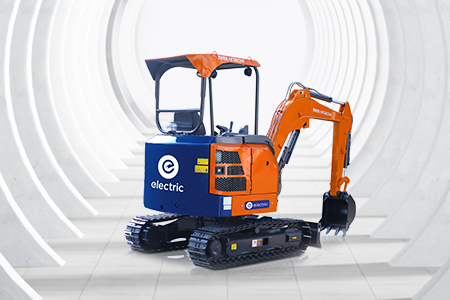
July 31, 2025.
Electric Construction Heavy Equipment Machinery: Benefits, Disadvantages, and More
Electric Construction Heavy Equipment Machinery: Benefits, Disadvantages, and More Introduction The construction equipment industry is undergoing a major transformation Continue Reading
Read more
April 22, 2025.
Construction Equipment License: How to Get Heavy Machinery Operator License in India
Construction Equipment License: How to Get Heavy Machinery Operator License in India Operating heavy machinery is a crucial role in Continue Reading
Read more
April 21, 2025.
Fuel Efficiency Tips for Excavators: How to Lower Your Heavy Equipment Operating Costs
Fuel Efficiency Tips for Excavators: How to Lower Your Heavy Equipment Operating Costs Fuel efficiency is a top priority for Continue Reading
Read more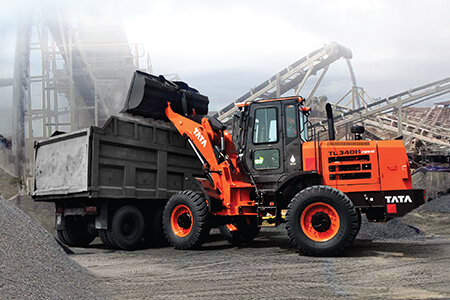
April 21, 2025.
Essential Wheel Loader Maintenance Tips for Maximum Longevity
Essential Wheel Loader Maintenance Tips for Maximum Longevity Wheel loaders are critical assets in the construction and heavy equipment industries, Continue Reading
Read more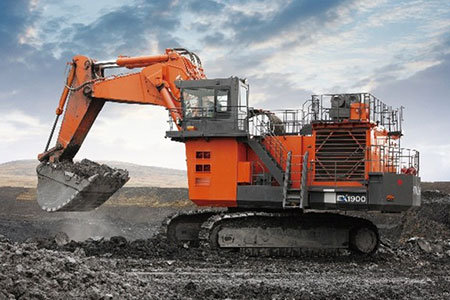
September 10, 2024.
A Comprehensive Guide to Mining Excavators by Tata Hitachi
A Comprehensive Guide to Mining Excavators by Tata Hitachi Having reliable and efficient equipment is essential for maximising productivity and Continue Reading
Read more
March 28, 2024.
Unearthing the Power of Excavators: A Comprehensive Guide to Types and Applications
Excavator: Types, Specifications, Uses in Construction Site Excavators have revolutionized the construction and mining industries, providing unparalleled efficiency in earthmoving, Continue Reading
Read more
March 28, 2024.
Enhancing Excavator Efficiency: A Comprehensive Guide to Excavator Attachments
Different Types of Excavator Attachments and Their Uses Excavators are strong equipment used extensively in building, mining, and other sectors Continue Reading
Read more